There is No Time Like Spring
Eleanor May Watson
22nd April - 6th of June
Winner of the Jonathan VIckers Fine Art Award, and a graduate of the Drawing Year at the Royal Drawing School, Watson has shown with Cynthia Corbett Gallery in Art Basel Miami, and most recently participated in ‘Table Manners,’ a show curated by Pia Sophie Ottes in collaboration with Barbati Gallery, Venice.
Eleanor May Watson's solo exhibition, There Is No Time Like Spring, arrives as a snapshot of a practice in motion: changing, deepening, finding new ways to hold the things that matter most. Motherhood is not the subject of these paintings in any obvious sense. There are no grand statements, no manifestos, no labouring of the point, And yet it is everywhere; in the choice of what to notice, in the warmth that saturates every canvas, in the quiet way that life and love and labour are allowed to simply coexist.
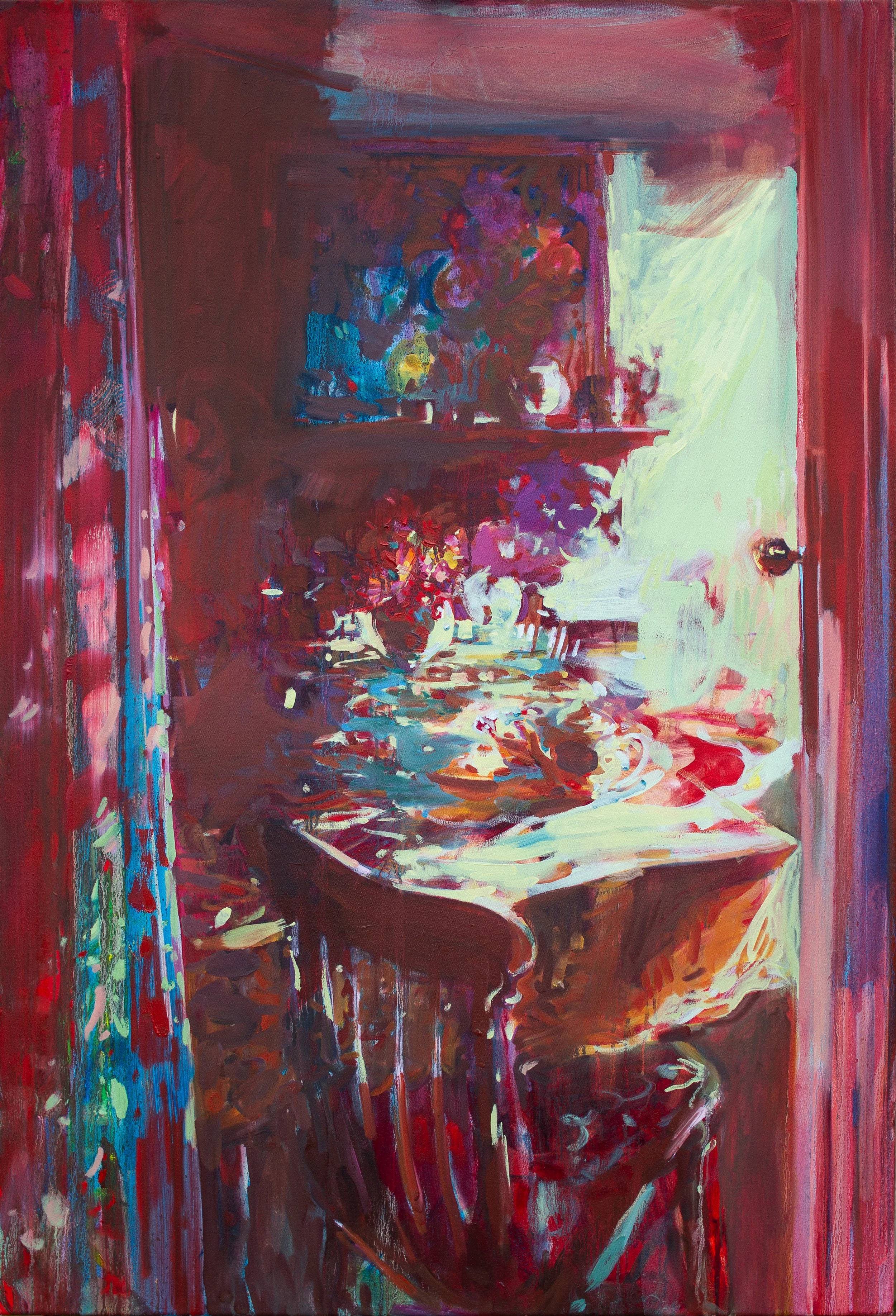
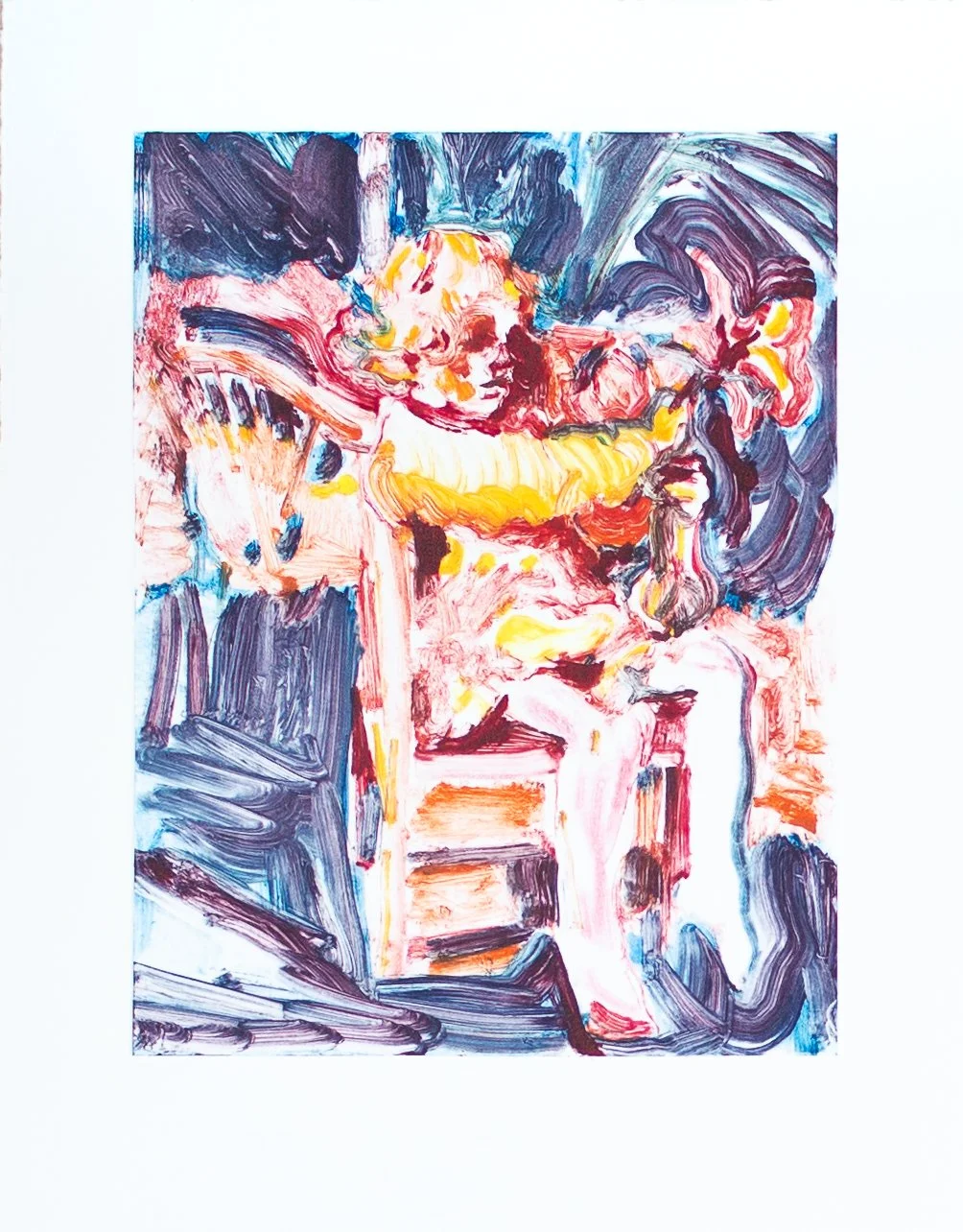
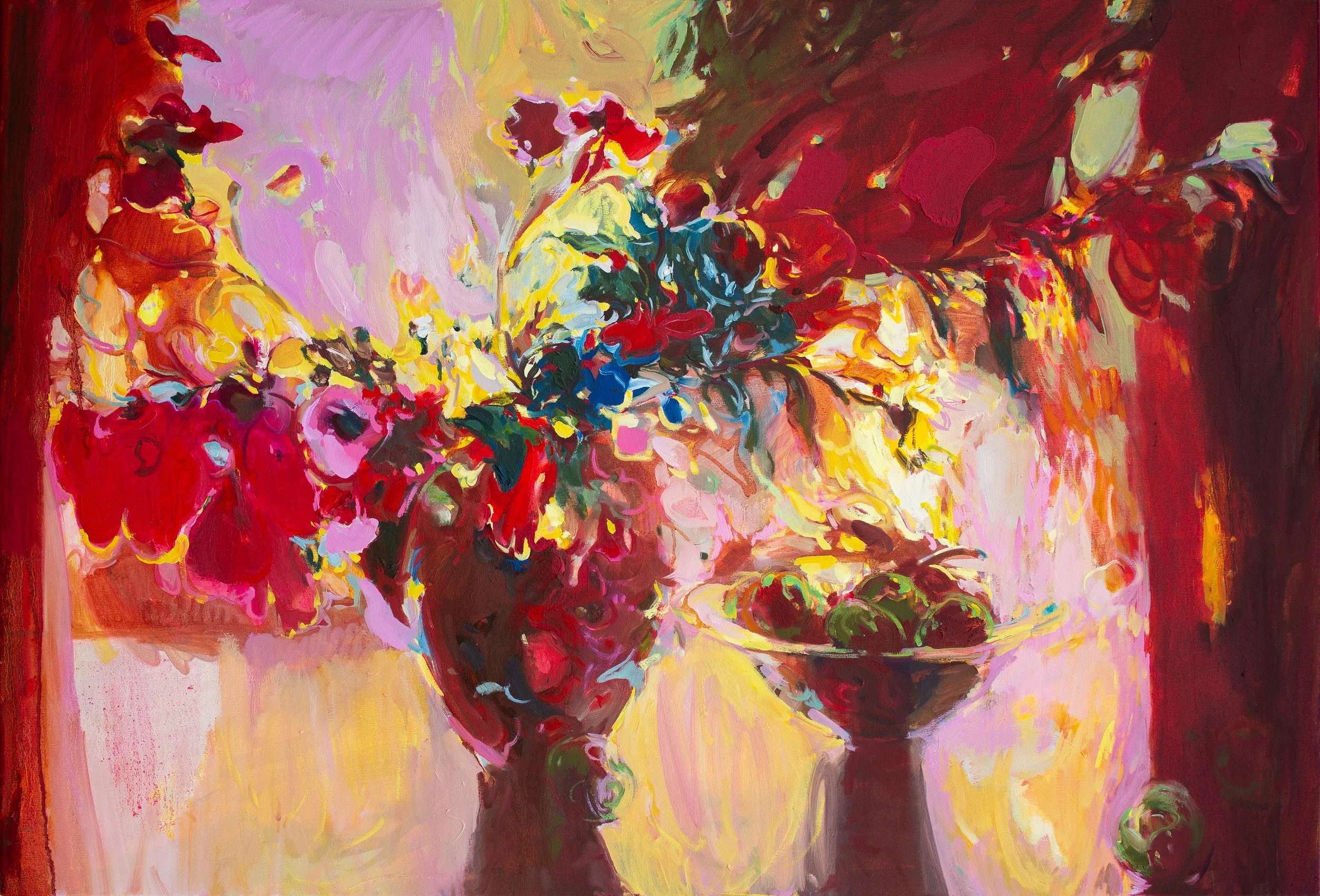
Watson describes her paintings as ‘emotional landscapes.’ The new works bring people into those landscapes for the first time and her canvases brim with life; colours shimmer, flowers spill from vases, patterns run across curtains, objects collect on table tops. And threading through all of it is light, which functions less as a formal device and more as the paintings’ true subject. It slides off petals, animates rooms, and gives shape to the people standing inside them.
Watson works two days a week from her studio above a hardware shop in Tunbridge Wells, and the figures drifting through these new paintings are the ones keeping her world turning while she does; the people caring for her two young daughters in her absence. There is something quietly radical about that. Feminist scholar Jacqueline Rose has written about how motherhood in Britain continues to push women to the margins of public life, offering only the tired binary of staying home or leaning in. Watson sidesteps it entirely. The children appear but don't dominate. Motherhood has evolved the work without consuming it. As Barbara Penner states, “Watson practices persistently, not heroically.”