LOVESICK
Louise Benton
22nd April - 6th of June
Benton has recently completed her residency in the European Artistic Program in Barcelona and Paris. She holds a diploma in Fine Art at the University for the Creative Arts and as well as an MA in History of Art from the University of Edinburgh. She has recently exhibited at The Tub, Studio 1.1 and Greatorex Street, and holds an MA in Painting from the Royal College of Art.
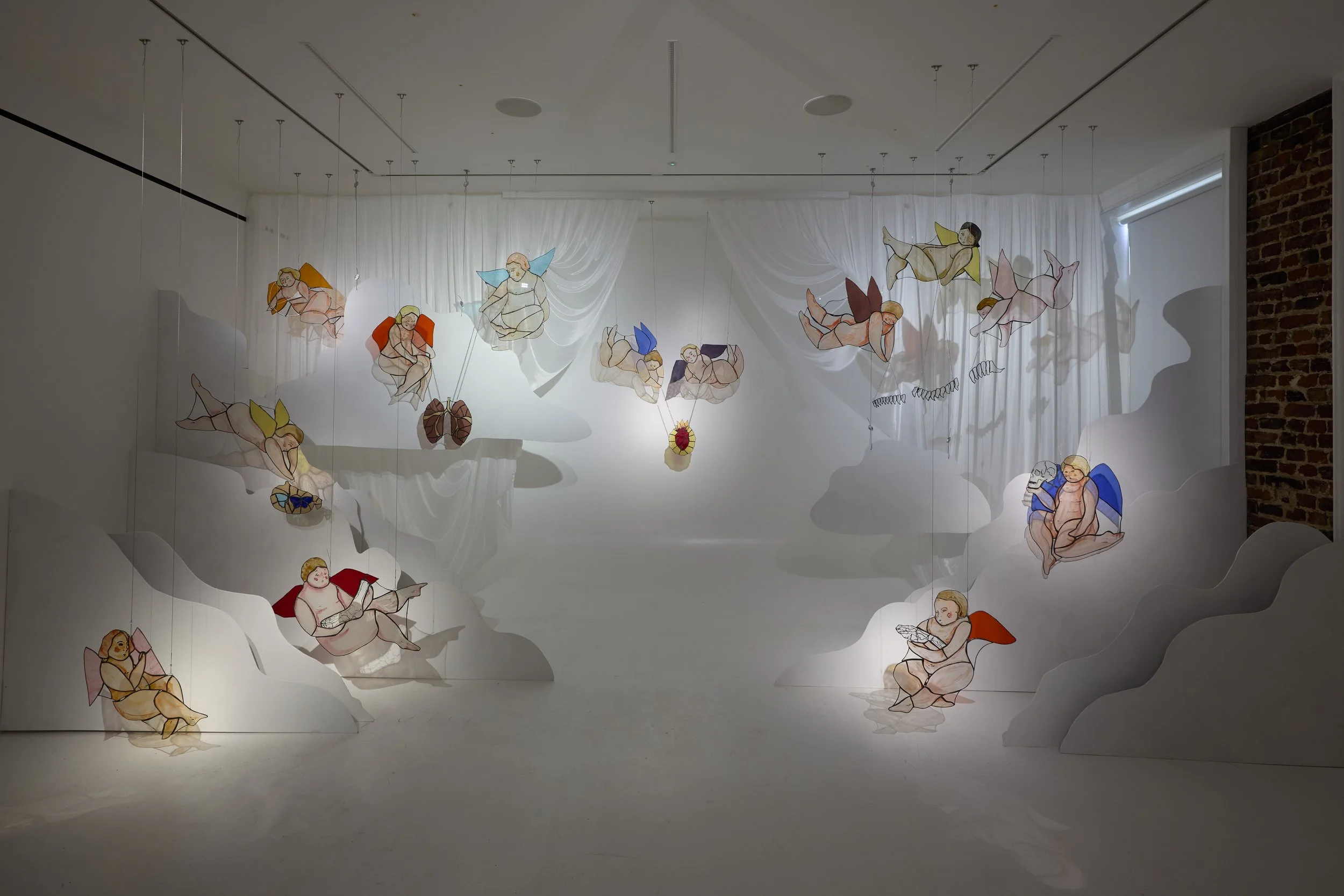
Lovesick transforms the space into a heavenscape. A show that draws its framework in how the early Christian mystics experienced divine through the body, with parallels of religious rapture and those of lovesickness, a condition widely diagnosed in the Middle Ages.
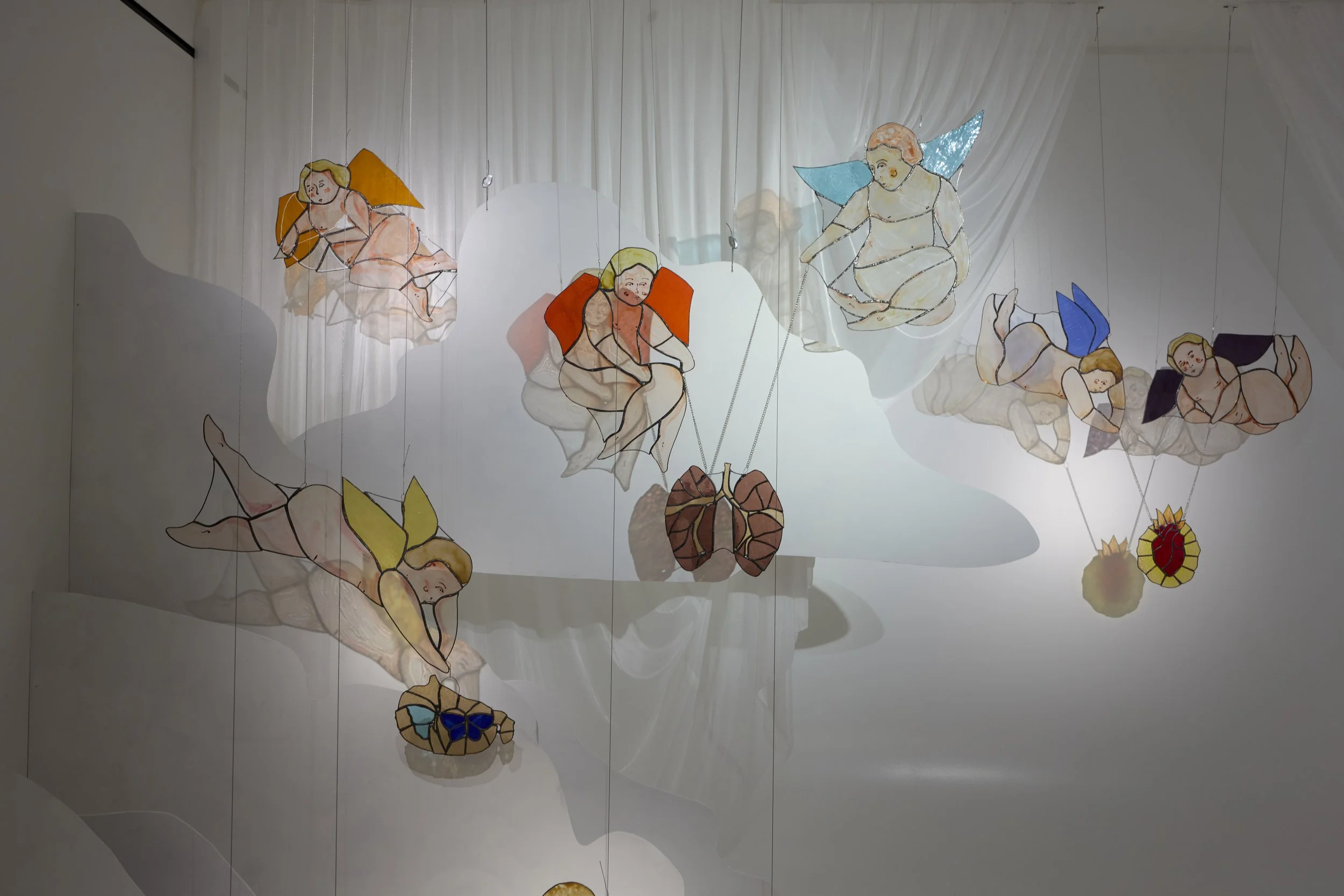
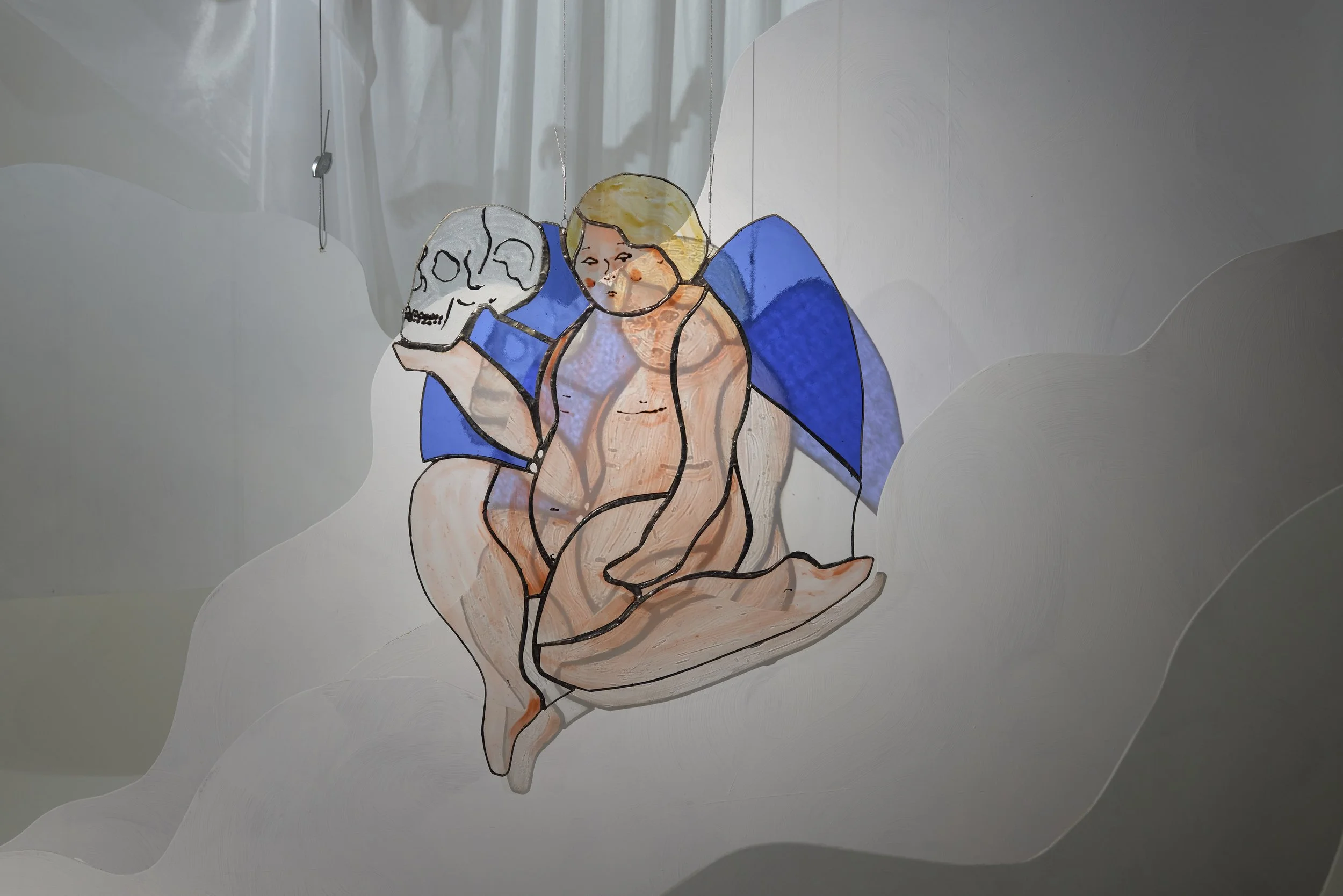
Louise Benton uses the visual language of Catholicism to tell contemporary stories of sexuality and pleasure. Her reference points are personal, stemming from memories of growing up within these belief systems, inside their cathedrals, absorbing their architecture of repression and devotion in equal measure. In a nod to the materials that build places of worship, she adorns glass with mythological stories of mermaids and cherubs before fusing them together with molten lead to create stained-glass windows. Her work examines the full feminine spectrum; questioning and elevating women from their censored histories towards a place where pleasure and freedom are valued.
The installation is structured in seven vignettes, each one a reliquary rendered in glass, each one corresponding to a different part of the body afflicted by love. Alongside these glass works, seven etchings are displayed on the walls and are reproduced in an accompanying guidebook; The Cure To Lovesickness. This piece performs as an ancient medical manual and invites visitors to move through the space as if completing a set of spiritual exercises.
Within this divine theatre, visitors become players, moving through the set as if through scenes of devotional drama. Each act focuses attention on a specific bodily experience of lovesickeness; butterflies in your stomach, your breath taken away, your heart aflame. Through contemplation, the pilgrim is invited to confront the physicality of longing and transmute it. The culmination of the seven acts gestures toward release, a state beyond heartbreak that echoes the mystic promise of rapture.